


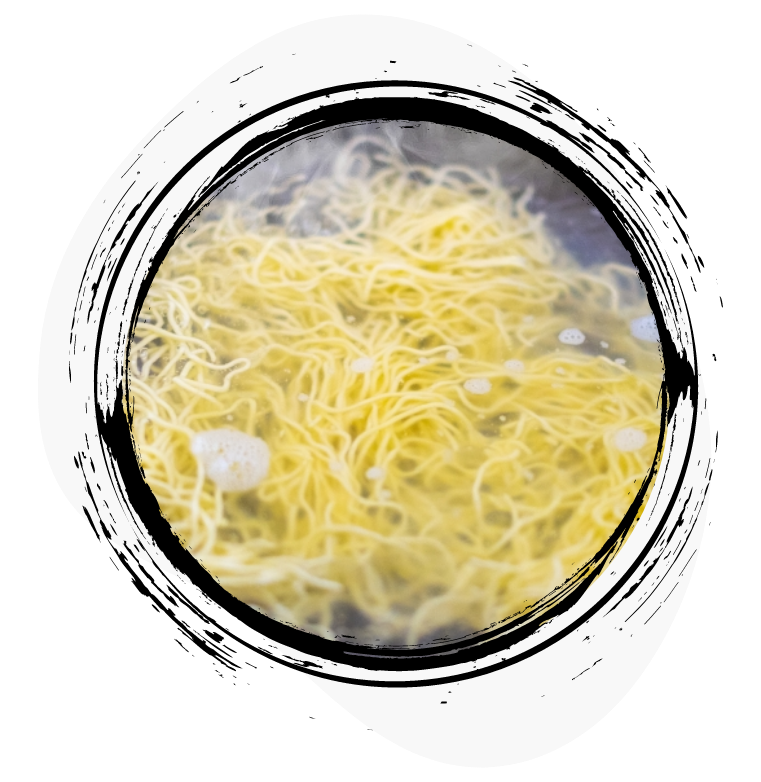

How to Boil Ramen Noodles Deliciously at Home
It’s easy to make delicious ramen noodles at home like a pro once you get the hang of it. Be sure to follow these tips when you have a ramen party at home. Surprise your family and guests!
Instructions

- Fluff and loosen the noodles.
Gently loosen the noodles by hand before cooking. This improves texture and prevents clumping. - Use plenty of boiling water.
Boil the noodles in clean, rapidly boiling water — at least 6 cups (1.5 L) per serving for best results. No salt please, it is not pasta!
If the water used to boil the noodles is dirty, the boiling point will be low and the surface of the noodles will become rough; the texture will be poor, and the noodles will get soggy easily. - Drain thoroughly.
Drain the noodles well to keep them firm and chewy. - Add noodles to soup properly.
Pour the hot soup into a bowl first, then add the drained noodles. This keeps the oil and flavor balanced.
How Long to Boil Ramen Noodles
Fresh ramen noodles: about 90 seconds (1.5 minutes)
Frozen ramen noodles: about 2–3 minutes
Boiling time varies depending on noodle thickness and type.
Always follow the package instructions for the most accurate timing.
What affects cooking time
Cooking time changes depending on:- Noodle thickness (thicker noodles take longer)
- Fresh vs frozen (frozen requires more time)
- Desired texture (firm vs soft)
Important tip
If you are using store-bought ramen noodles, always follow the cooking instructions on the package.
Cooking times vary by brand, noodle style, and hydration level, so the package provides the most reliable reference.
How to adjust
- Always adjust cooking time slightly based on your preferred texture.
- For softer texture: cook a bit longer
- Always taste-test during cooking to reach your preferred texture
Tips for Frozen & Cold Noodles
- Defrosting:
For the best bite, thaw frozen noodles in the refrigerator one day before cooking. Aging them in the fridge for 2–3 days makes them even chewier. Please do not defrost in microwave. - Cooking from frozen:
Skip the fluffing process. Use extra boiling water to maintain temperature. Add frozen noodles and let sit for 10 seconds, then gently loosen with chopsticks. Boil about 1 minute longer than usual. - For cold noodle dishes:
After boiling, rinse noodles in cold water to remove excess starch. For an even better texture, place them in ice water to chill rapidly. This tightens the noodles and makes them pleasantly firm and chewy — a great technique for cold dishes like Hiyashi Chuka or Tsukemen.
